It may have been noticeable that I was absent from social media for much of last week. This was because I was hanging out with a group of sound art academics and researchers from London, The Philippines, and Hong Kong as part of a “Listening and Sound Tambay.”
Hanging out may sound like a frivolous activity, but this particular hanging out was in reality an inspiring week for me. To clarify this use of the term, Tambay is a Filipino term meaning “to hang out, to socialise, to stand by, to loiter” which Dr Dayang Yraola at the University of the Philippines—the initiator of last week’s tambay—describes as “an ambiguous form of social gathering often in parallel to dominant structures.” Dr Yraola’s long-term research has mainly addressed the role sound and sound art-related practices play in Filipino life and culture, and this Listening and Sound Tambay was set up by her to pay attention to the relations between sound and tambay, as well as to share knowledge and experiences, and work on cross-cultural practices for sound art research and archiving.


The first Listening and Sound Tambay took place in 2025 in the Philippine city of San Antonio, bringing together Dr Yraola’s contacts within the Philippine sound art community with those in Hong Kong where she had completed her PhD. The second Tambay convened last week was organised by her in collaboration with CRiSAP (Creative Research into Sound Art Practice) at University of the Arts London, and brought together members of the CRiSAP community (Cathy Lane, Mark Peter Wright, Lisa Hall, Nicol Parkinson, and Lu Deng) representatives from the Philippines (Benjamin Meamo III and Ma. Ivy Claudio), Hong Kong Baptist University (Cédric Maridet), and The Chinese University of Hong Kong (Yim Sui Fong), and myself.
What is the significance and usefulness of tambay? Dayang proposes tambay as an “unproductive” means of practice and research, giving access to relationships and experiences which tend to be overlooked or unheard when activity is geared towards concrete results and products. Tambay as a practice has parallels to historical discussions of ethnographic ethics, in which research methods are used critically to avoid imposing a researcher’s norms on their subjects, and to respect the nature of the places where the research is taking place.
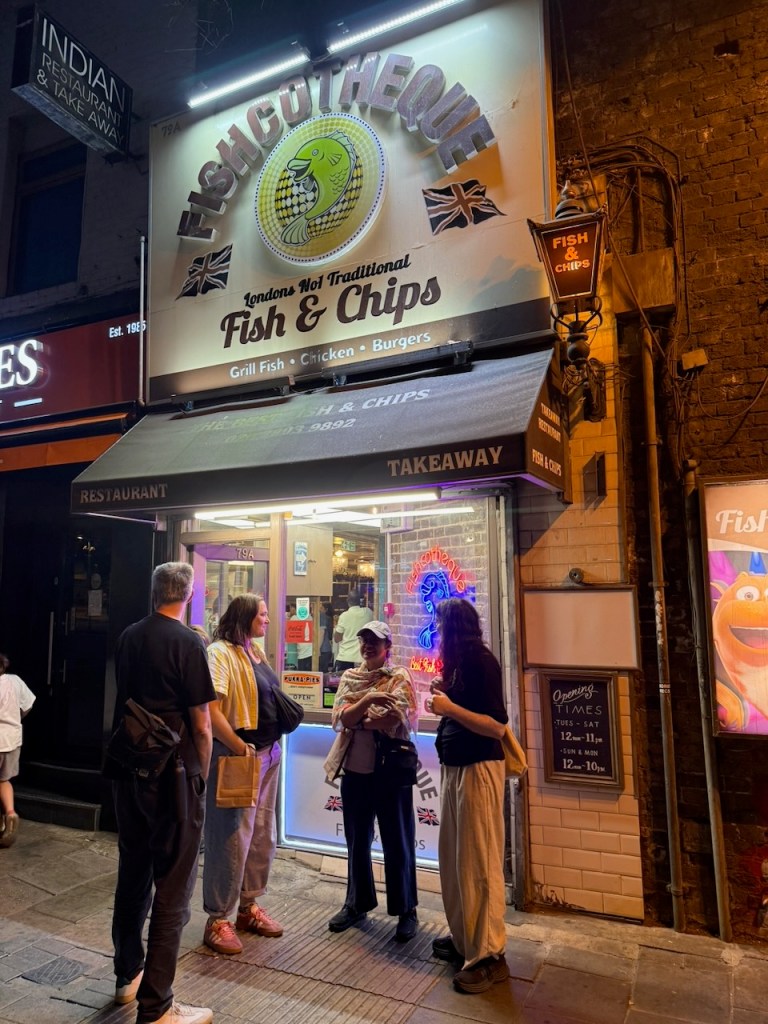
For the tambay last week our group spent seven days together, living in the same building, eating communally, sharing our practices and experiences, and travelling together around the city making contact with relevant events and people. A major part of our involvement was the drafting and realising of text scores designed to stimulate interactions between ourselves and the surrounding sonic environments. Each day one or two of us would guide the group towards an engagement with our surroundings through listening and paying attention to sound.

On the first day we took part in a sound and movement workshop led by Moreskinsound (Ania Psenitsnikova and David Toop), followed by Irene Revell of CRiSAP introducing their Scoring Warnings project which investigates the connections between art practices and emergency communication. On other days we visited the University of the Arts London’s archives, including the Her Noise Archive introduced by Erin Liu, and the London Musicians’ Collective Archive which Tambay participant Nicol Parkinson is working with.


We also visited The British Library to hear about their sound archives from Andrea Zarza Canova. In terms of art events, on Saturday we travelled to outhouse Gallery in Camberwell to join an afternoon of outdoor performances related to Cath Clover’s exhibition in the gallery, and on Sunday to YDP Space in Central London for their Bubbling Summer Festival.


Other places we hung out included the Eat the Sunshine . Down the Sun cafe in Kennington founded last year by a Hong Konger and two Filipinos, which has a basement event space for performance. On the last evening we made our way over to Cafe OTO for a set of experimental music performances, but not before visiting the home of CRiSAP’s previous director, Cathy Lane, where we enacted the event score originally drafted by Fluxus artist Alison Knowles which instructed us to “Make a salad.”

Although productivity is not the aim of tambay given its principle of “hanging out”, I found our engagements over this week highly rewarding and inspiring. Spending this time together served to practically work out how tambay can be a part of our practice, research, and the archiving of sound art, and how it can become part of a general sensibility for practices. For me it was good to step back from the urge to produce, and be reminded of where communities—particularly those involving sound—can come about, and lead in unexpected directions which do not overwhelm our individual concerns.
–end–
Links